Diana Senik
Student number: 5450403
Team: Twist Twist Twist
SC: Norg, Dirk D.L

Some of my works:


Abstract
Hi, I’m a third-semester Media Creation student. I enjoy working in Graphic Design, Web Design, Logo Design, Animation, and Photography. I have work experience as a Graphic designer in a Ukrainian agency, where I created posts for Instagram, combining an AI image generative tool and Photoshop.
For this semester, I decided to create my portfolio in a video format because I’ve always enjoyed filming but never had the opportunity to fully explore it. I thought this would be a great chance to learn more about using video cameras, lighting, and sound effects.
In my video, I plan to showcase the activities that have had the greatest impact on my career path, as well as the ones I enjoy the most. I would like to present the video through an interactive website with a cinema-inspired theme.
As for the group project, I chose the Pride Project because we all wanted to work with filming and collaborate with a large client. We’re excited about the opportunity for our work to be seen by a wide audience.
This semester, I want to focus on improving my filming and editing skills, as well as learning to use new tools and techniques. I also recently discovered a new passion for photography, and I’m eager to learn more about cameras, photography techniques, and photo editing.
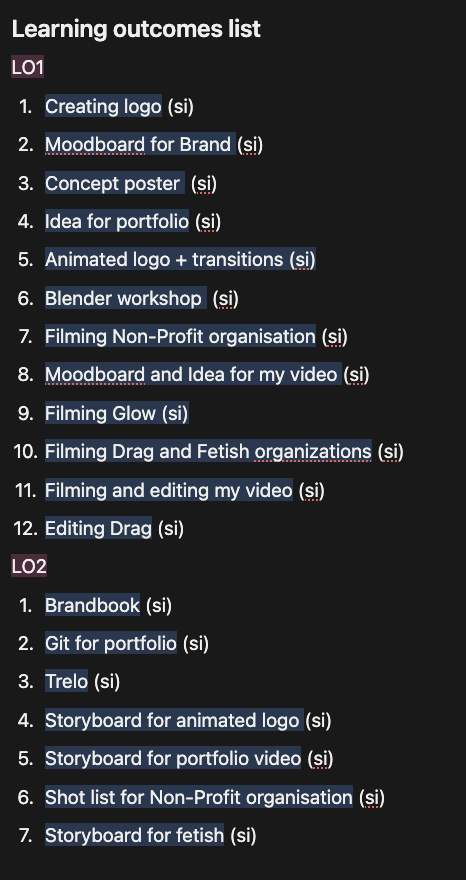
Learning Outcome 1 - Conceptualize, Design and Develop
Moodboard for Brand
I helped develop a shared visual identity for our agency, Twist Twist Twist, by creating and presenting a moodboard that reflected our team’s creative direction. Through visual research, feedback sessions, and style exploration, I translated abstract ideas into a cohesive concept. This process showed how early-stage design tools support professional media development and collaborative branding.
Creating Logo
I designed a logo for my group, TWIST TWIST TWIST, inspired by movement and dynamic visuals. After sketching and experimenting with fonts in Figma and Illustrator, team feedback helped refine the final design. I learned how to turn abstract ideas into visuals and how using different tools improves creativity. Next time, I’ll explore more type options earlier and test simple animation mockups.
Idea for Portfolio
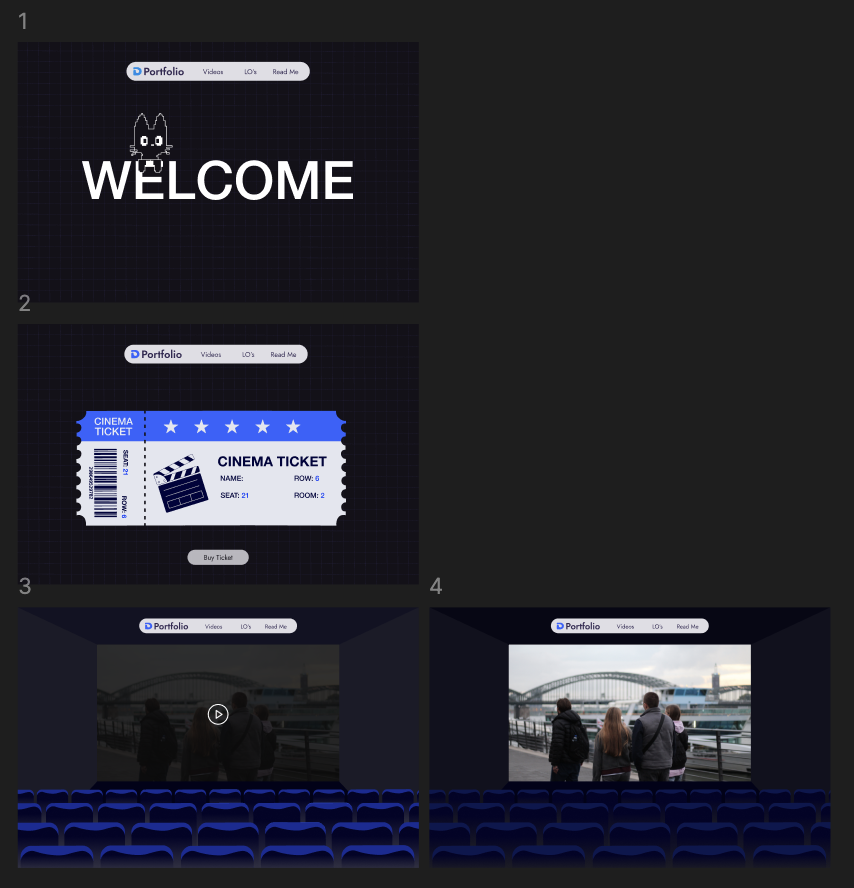
I created a cinema-themed concept for my portfolio, designing illustrations in Illustrator and animating them in Figma to enhance interactivity. The process helped me turn an abstract idea into a visual story and strengthened my skills in combining illustration with interactive design. Next time, I’d test more visual themes earlier and include more animations to make the design even more engaging.
Moodboard + Idea for my video
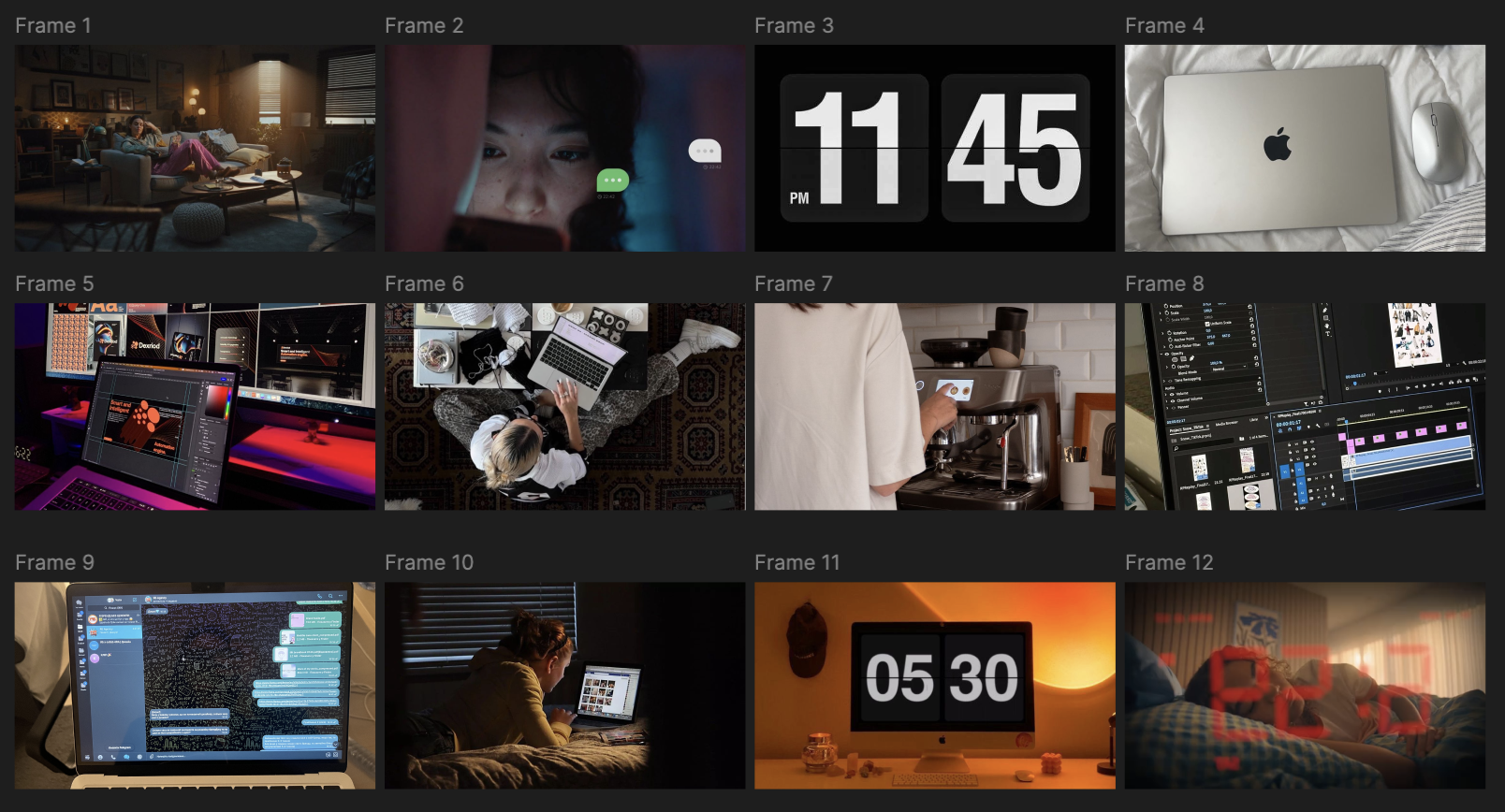
I built a Figma moodboard to lock down the vibe, colors, and style for a portfolio video. Pulling references from Pinterest, YouTube, and Instagram, I landed on a cozy, nighttime feel—so I’m creating a calm, homey work-at-night mood piece.
Creation of Concept Poster
I worked with my group to draft several poster concepts in Figma, since I was the only one with InDesign access. After feedback, I refined the chosen design, rebuilt it in InDesign while learning the layout tools, then finalized and printed it at the Maker Space.
Blender Workshop
I attended a beginner Blender workshop to get into 3D design. We covered the basics—navigation, scaling, key shortcuts, and switching between Object and Edit Mode—then built a simple house model and finished by rendering the scene.
Filming Glow
My group and I were invited by Fontys Media Crew to film B-roll for the university’s social channels, capturing a student-made installation featured in GLOW. After meeting the creators to understand the concept, we planned shots that highlighted how people interacted with the piece and filmed everything using professional ISSD equipment.
Filming Non-Profit organisation
My group and I planned and shot a video for a non-profit. I prepped by watching tutorials on lighting, camera setup, and audio. We rented pro gear from ISSD—cameras, lights, and mics—set up the interview on location, and captured B-roll during the performance.
Animated logo + Transitions
I designed an animated logo and Instagram transitions using After Effects, guided by feedback and visual research. This project helped me apply design principles like simplicity and rhythm while learning how motion can strengthen a brand message. I also learned the importance of iterating early and testing ideas with users sooner.
Filming Drag and Fetish organisations
I worked in a group to film an interview with Drag and Fetish performers, focusing on preparation, lighting, and composition. Careful planning and equipment testing led to a smooth shoot and better storytelling. The experience taught me the value of flexibility, patience, and allowing enough time for performers.
Filming and editing my video
For my personal project, I created and edited a short film about the creative process of making a logo. I focused on mood, rhythm, and visual storytelling, using music as a key driver in the edit. This evidence shows my growth in combining sound, timing, and visuals, as well as adapting creatively during filming.
Editing Drag reel
I co-edited a reel about the Drag community by shaping a clear narrative from interviews and visuals, despite a language barrier. Using translations and feedback, we refined pacing and clarity for social media. This project strengthened my skills in visual storytelling, editing for Instagram, and using sound to support meaning.
Learning Outcome 2 - Transferable production
Brand book
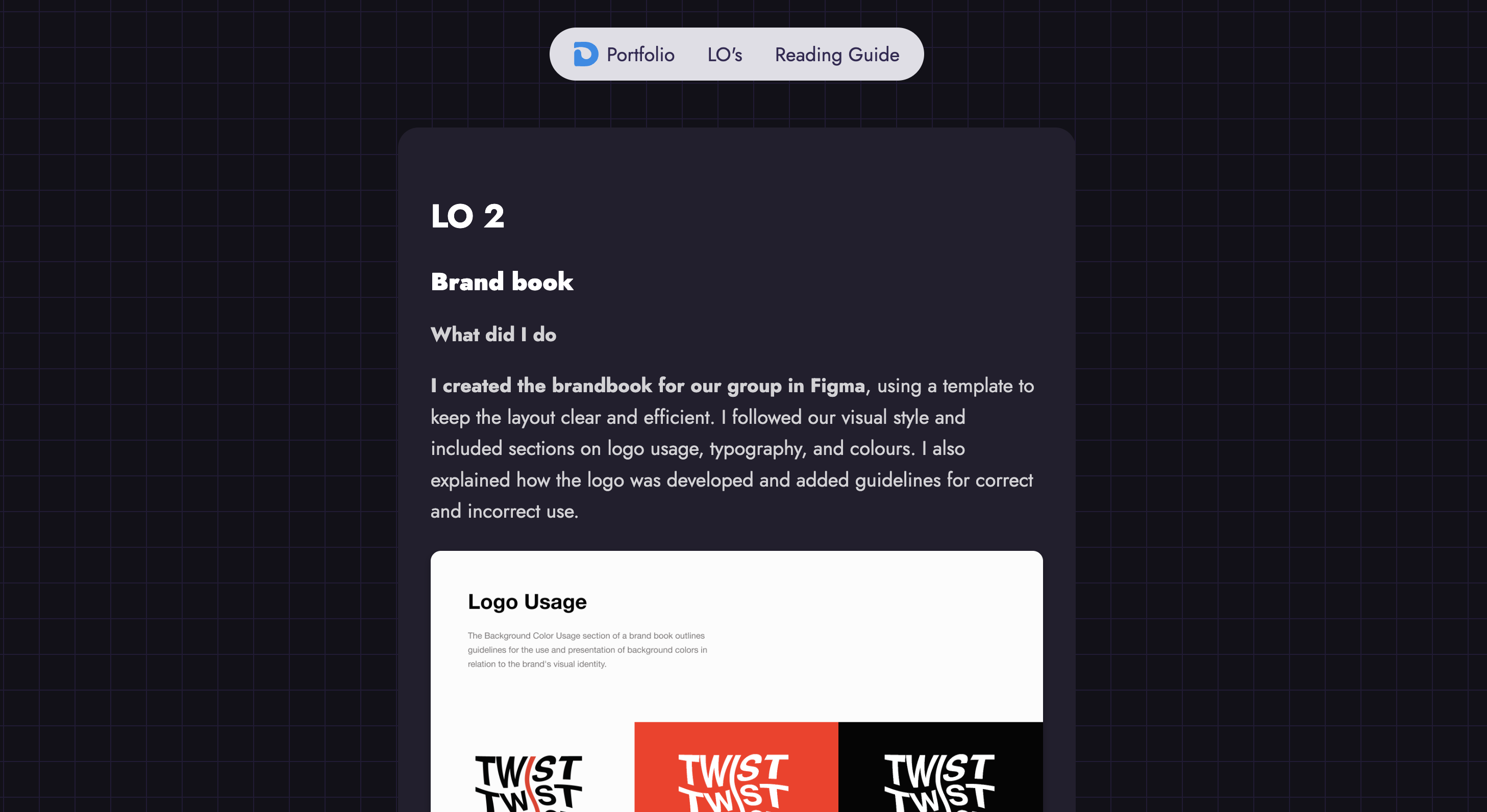
I created a brandbook for our group in Figma, using a template to present our logo, typography, and colour guidelines clearly. The process helped me understand how to communicate design rules effectively and maintain consistency. Next time, I’d gather team feedback earlier and include mockups to make the guidelines more practical.
Git for portfolio
I set up a GitLab repo to manage my portfolio website and committed each update as I went. Using Git helped me track progress and keep the workflow organized.
Trelo
My group and I used Trello to organize our tasks, assign responsibilities, and plan weekly goals. It improved our communication, organization, and workflow efficiency. I learned the value of clear planning and visual tools for teamwork. Next time, I’d include deadlines and labels to make task management even clearer.
Shot list + Storyboard for Non-Profit organisation
Before the interview shoot, I drafted a shot list with our planned gear and possible angles. The next day, my groupmate added a storyboard with “Need” and “Nice to have” shots, and I merged both into a clearer, more visual guide for the team.
Storyboard for my video
I created a storyboard to plan the shots, angles, and structure for a portfolio video. I started with rough sketches to map the flow, then built a more detailed version using Pinterest references to communicate the mood and direction clearly.
Storyboard for animated logo
I created a detailed and visually clear storyboard to plan the animated logo and communicate the concept effectively. It supported a smooth animation process and made the idea easy to share with the client or other designers. This LO shows my ability to plan, document, and communicate design ideas in a professional and collaborative way.
Storyboard for fetish
I developed a storyboard with timelines and explanations to clearly present our filming concept to the Fetish organization. It helped align the team and client on structure and intent, even without technical film knowledge. This LO highlights my skills in visual planning, clear communication, and collaboration with external partners.
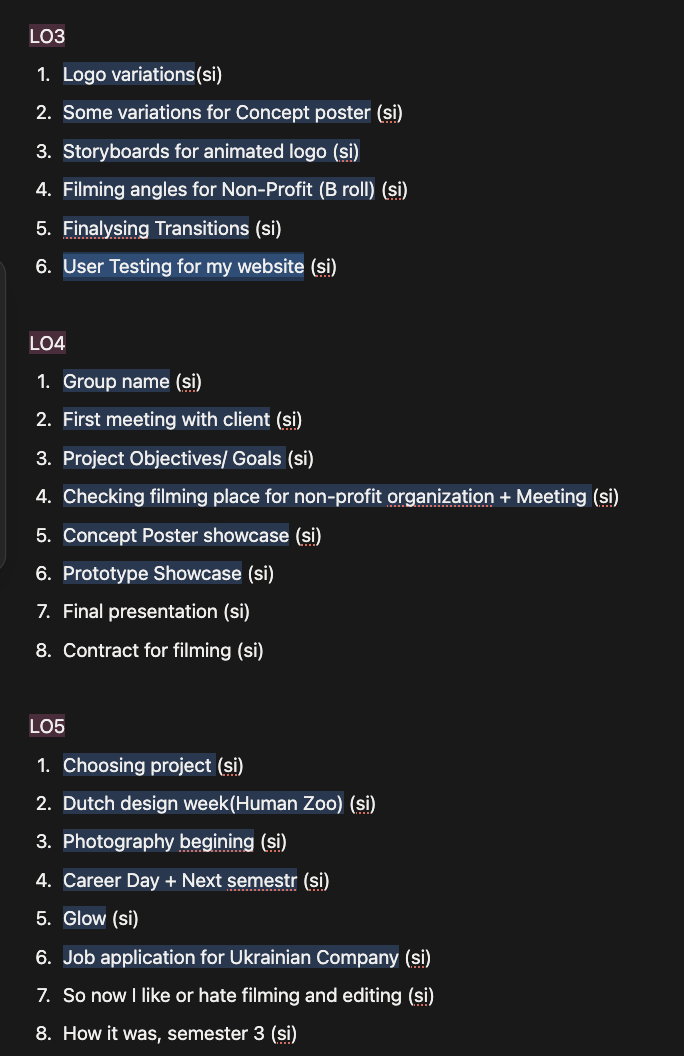
Learning Outcome 3- Creative iterations
Logo variations
I created multiple versions of our group logo, experimenting with fonts, colours, and layouts. Exploring different styles and getting feedback from my group and teachers helped me find the strongest design. I learned the value of iteration and early feedback in developing better ideas.
Some variations for Concept poster
I combined my group’s design ideas into one concept poster in Adobe InDesign, refining it after teacher feedback. Working together helped clarify the direction and improve the final result. I learned the importance of collaboration, flexibility, and using feedback to strengthen a design.
Storyboards for Animated Logo
Before animating the logo, I sketched out initial ideas and developed three storyboard prototypes showing transitions and colors. After sharing them with my group and teacher, I used their feedback to shape the next iteration.
Filming angles for Non-Profit (B-roll)
We filmed B-roll for a non-profit in a tight space, so I experimented with different angles to get usable shots. With our teacher on-site giving feedback on composition, I adjusted as we filmed and improved the results.
Learning Outcome 4 - Professional standards
Group name
My group brainstormed and voted to choose our name, TWIST TWIST TWIST, which reflects our bright and energetic style. The process went smoothly thanks to teamwork and feedback. I learned the value of collaboration and structured decision-making in reaching a result everyone supports.
First meeting with client
We organized and presented our ideas during the first client meeting, receiving feedback that clarified our direction and project scope. I learned the importance of direct communication, flexibility, and clear goal-setting when working with clients.
Project Objectives/ Goals
My group and I wrote a Project Plan for our assignment and split the sections among us. I handled the Project Objectives and Goals, outlining that our main task is to film three reels aimed at educating people about LGBTQ sub-communities.
Concept Poster showcase
We took part in a concept poster showcase, presenting our idea in both digital and printed form. We gathered feedback from teachers and classmates for our checkpoint, and also walked around to review other groups’ posters and share feedback.
Meeting with Non-Profits + Checking place for filming
Our group held an online meeting with the non-profit to learn more about their band and sort out the filming schedule. We discussed locations and timing for the interview and performance, and since the members work full-time, we decided to film at the bar where they perform rather than at Fontys.
Prototype Showcase
Our group presented our storyboards and prototypes at the Prototype Showcase. After filming our first non-profit sub-community the night before, we added those new shots and showed the updated storyboard. We also presented my groupmate’s theme-reveal prototype and my storyboard for the animated logo.
Final presentation
I helped design the structure and visuals of the final presentation and took an active role in presenting during the showcase. The clear flow and teamwork ensured the story of the project was easy to follow, even when a technical issue came up. This LO highlights my ability to communicate ideas clearly, stay calm under pressure, and collaborate effectively in a professional setting.
Contract for filming
I created a professional filming agreement by researching formal contracts and refining it based on feedback. This task strengthened my understanding of ethical and legal responsibilities in media production. It also shows my ability to work carefully, professionally, and responsibly when dealing with real participants.
Learning Outcome 5 - Personal leadership
Choosing Project
Our group discussed our strengths, interests, and goals before choosing the Pride and Icon Films projects. The conversation helped me understand my passion for filming and how to make decisions as a team. I learned the value of honest communication and aligning projects with personal growth.
Photography beginning
After a photography class, I explored taking and editing my own photos, experimenting with angles and styles. I discovered a strong interest in portrait photography and learned how editing can shape mood and expression. This experience deepened my passion for capturing real moments and improving my creative skills.
Job application for a Ukrainian Company
I applied for a Junior Designer role at a Ukrainian cosmetic company I found on Instagram. I put together a portfolio showcasing my best work and relevant experience, completed a test task in Photoshop and InDesign, and submitted everything by email.
Career Day + Next semester
I attended the Fontys Career Day to explore different companies and get a clearer sense of what direction I want to pursue next semester. I spoke with several design and AI firms about internships and their focus areas, and visited the profiles floor to learn more about Generative AI and Frontend.
Dutch Design Week (Human Zoo)
I visited the Human Zoo installations at Dutch Design Week to explore new design perspectives. I watched several pieces with strong visual and psychological layers. My favorite was “Mutual Imprint,” where a hug triggers an animation, and I spoke with the Ukrainian designer behind it.
Glow
I attended the GLOW Festival again this year to explore the light installations around Eindhoven. It’s always a standout experience to walk through the city and see creative ideas brought to life in public spaces, with a lively, energetic atmosphere.
So now I love & hate filming and editing
By choosing filming and editing as my main task, I pushed myself out of my comfort zone. What started as awkward and doubtful turned into an enjoyable and motivating process, especially during editing. This LO shows how patience, self-trust, and persistence helped me discover confidence and enjoyment in a skill I initially feared.
How it was, semester 3
This semester was challenging but highly rewarding, as I worked on a completely new type of project with new people. I became more organized, focused, and confident in filming and editing, even when faced with language barriers. Overall, this LO reflects strong personal growth, teamwork, and pride in overcoming challenges I once thought were impossible.
Reflection
This semester really pushed me, but in the best way. I explored so many parts of the creative process, from building moodboards and designing logos to filming and editing real stories. Working with different teams taught me how to balance my ideas with group goals, and I started to really enjoy the challenge of turning abstract concepts into something visual.
I took on roles that felt unfamiliar at first, like handling professional equipment or presenting to clients, but over time, I found confidence in those moments. Tools like Figma, Illustrator, and Git became part of my everyday workflow, and I learned to lean into feedback instead of fearing it. I also discovered a love for editing, something I never expected.
Looking back, I see real growth—not just in my skills, but in how I work with others, take initiative, and trust my instincts. It feels good to say I’m proud of what I’ve done.
How I developed my Portfolio
1st submission
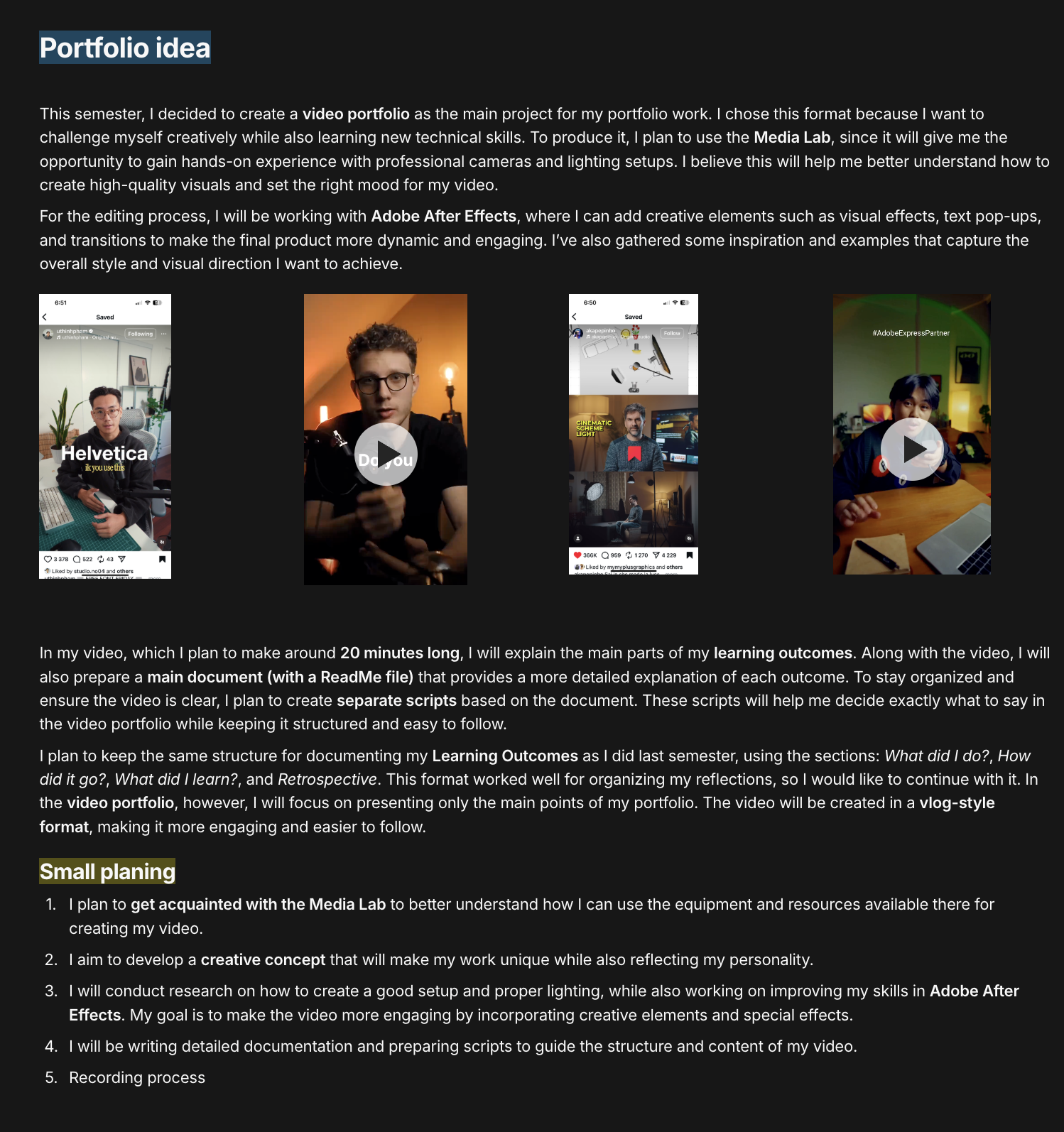
In the previous version of my portfolio, I only described the idea for my video project. Originally, I planned to create a 20-minute video, but after feedback from my teachers, I decided to shorten it to about five minutes. This will allow me to focus on quality and storytelling. I plan to present the video through a well-designed, interactive website that matches my cinema theme.
2nd submission
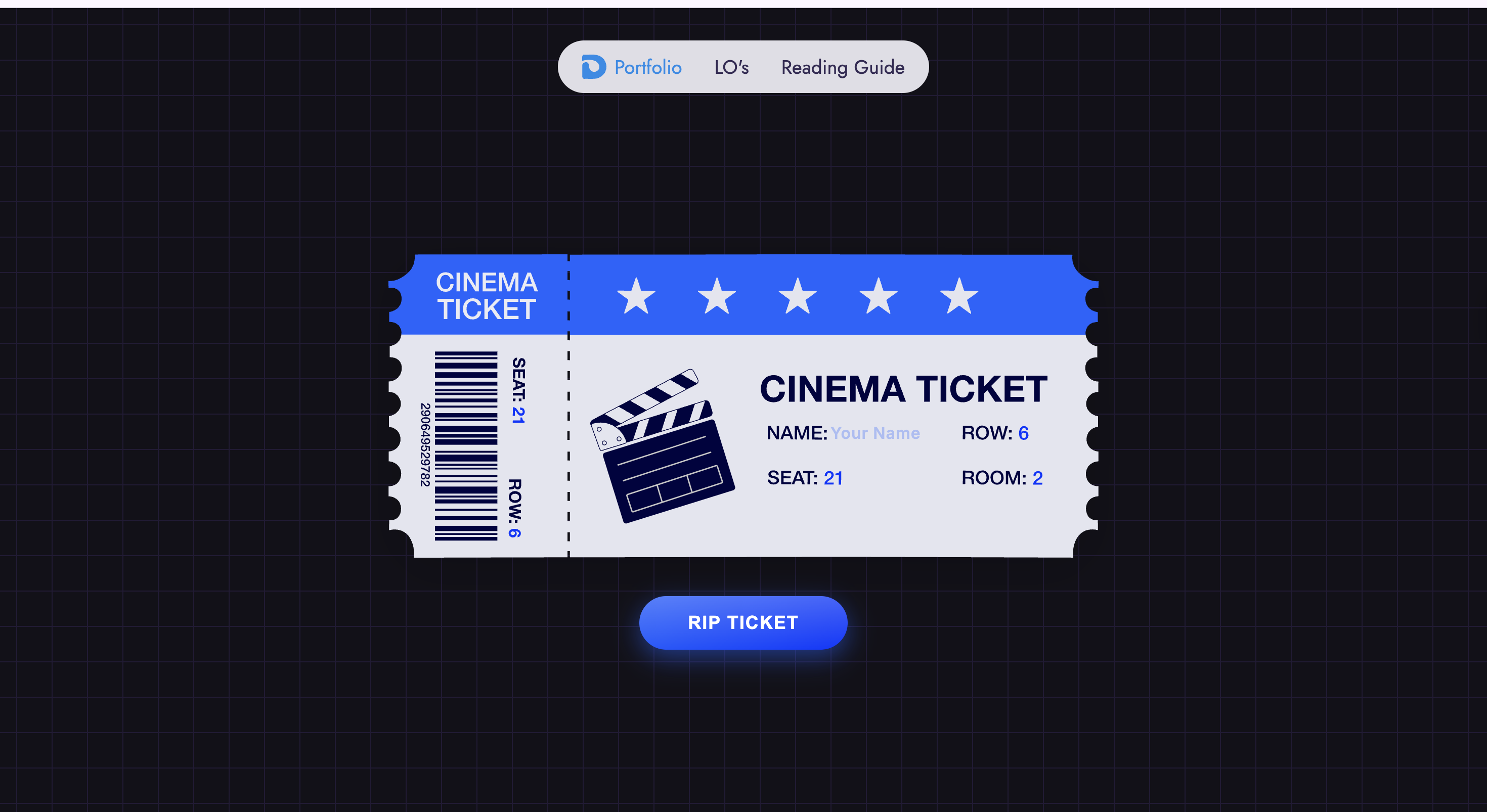
I updated my portfolio website with new features I designed in Figma, including a ticket component and a custom animation for it. These additions make the site feel more interactive and aligned with the visual direction I’m aiming for.
At the same time, I refined the concept for my portfolio video. I now have a much clearer idea of its tone and structure, so I created detailed storyboards to map out the shots, transitions, and overall flow. This helped me lock down both the narrative and the visual style before moving into production.
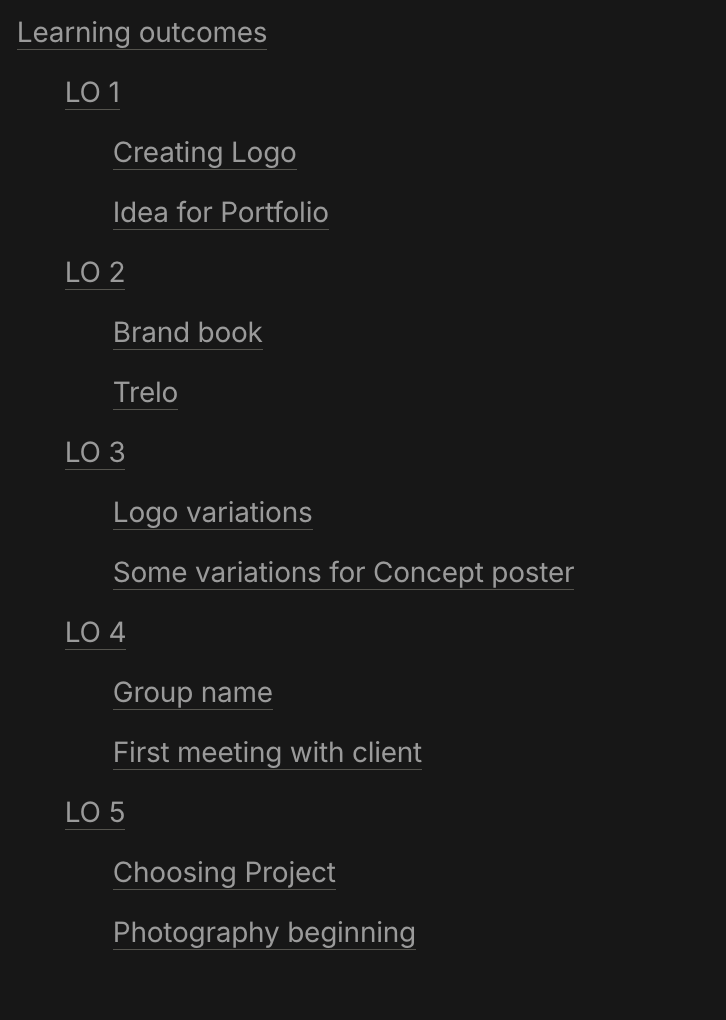
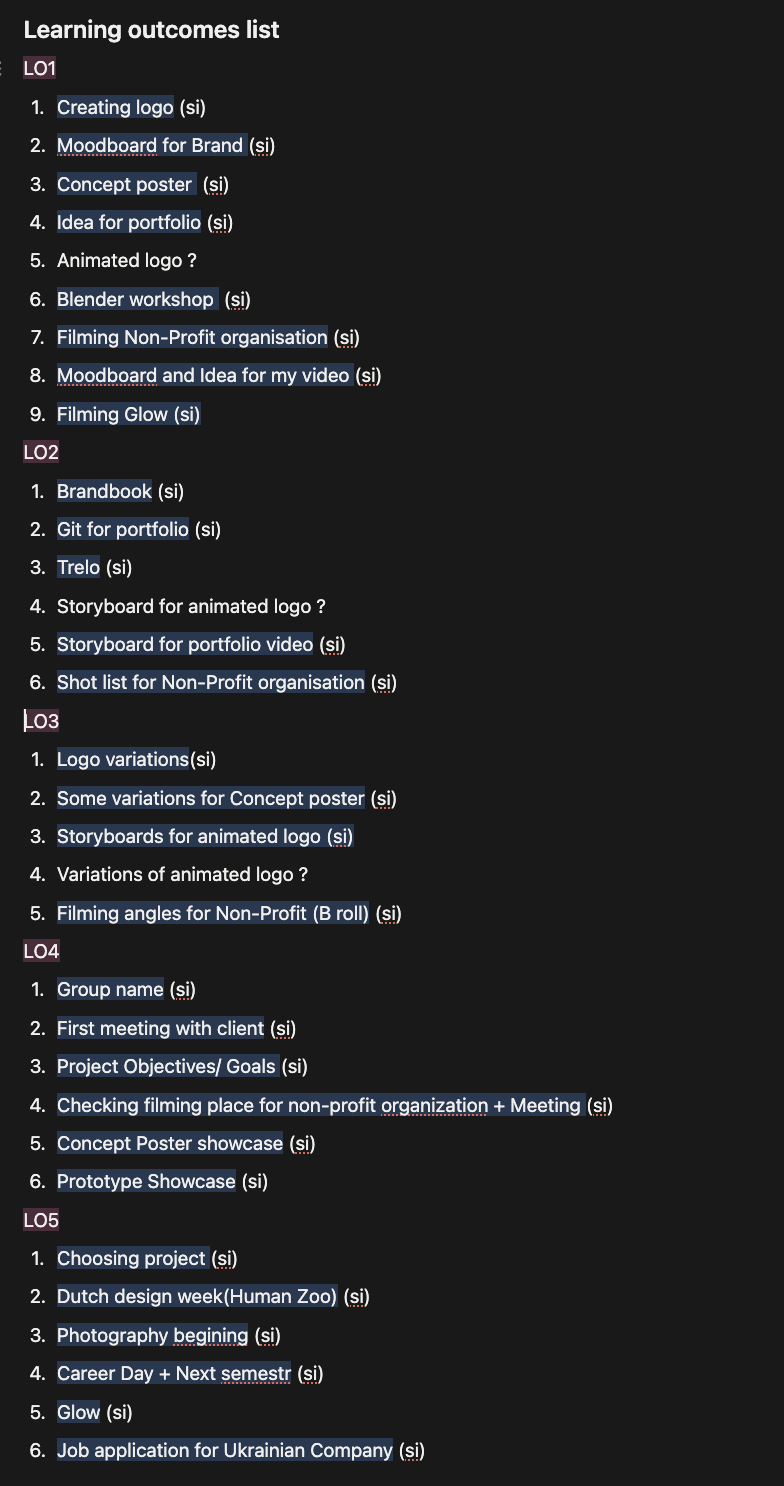
Of course, I also added more Learning Outcomes, as I’ve completed many different activities this month. Before writing each one, I take time to analyse which activity fits best with a specific Learning Outcome. This process helps me stay organised and makes my portfolio more structured and consistent. It also allows me to clearly see how each task contributes to my overall learning progress.
3rd submission
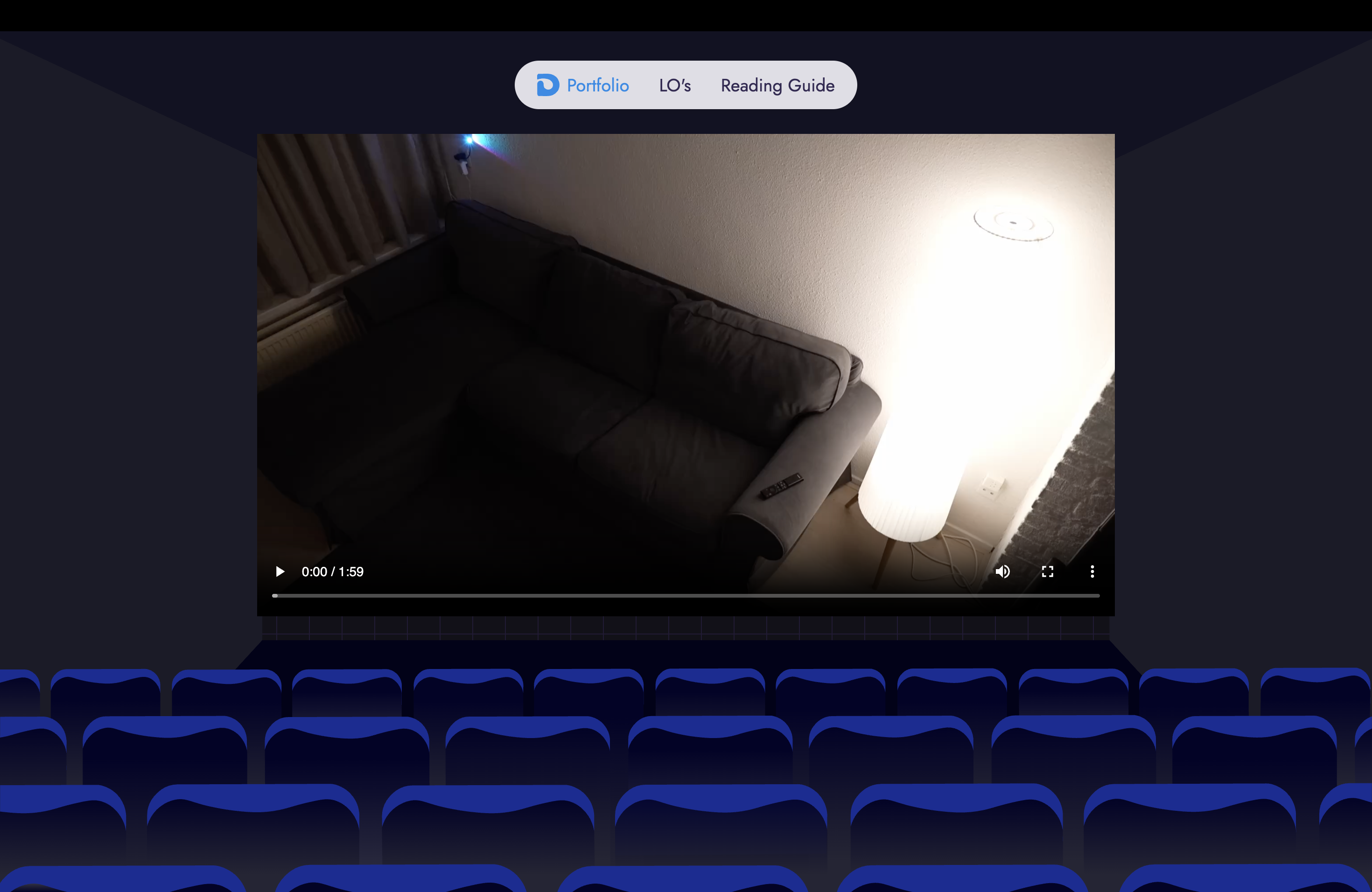
For this final submission, I completed my website by adding a cinema hall section with a video, which I recorded and edited myself. I also redesigned the Learning Outcomes and Reading Guide pages for a clearer layout and linked the evidences directly from the Reading Guide. Based on feedback, I added extra navigation details, like an arrow on the homepage and a “Next” button on the Learning Outcomes page to improve user flow.
As always, I added new evidence to support the learning outcomes, but this time the focus was mainly on filming and editing final products. These additions reflect the creative and technical work I’ve done toward the end of the semester.